Our family history


From the mountain valleys to the seaside
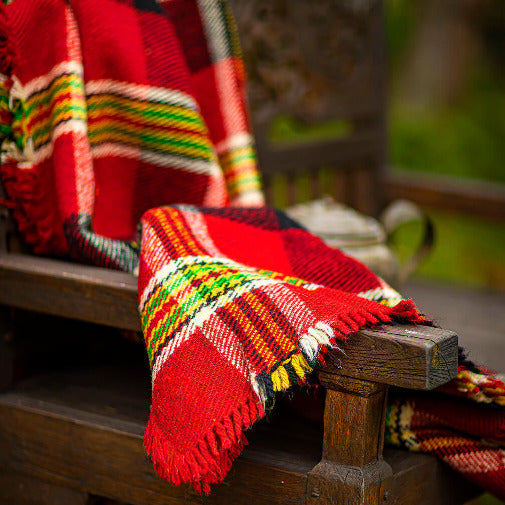
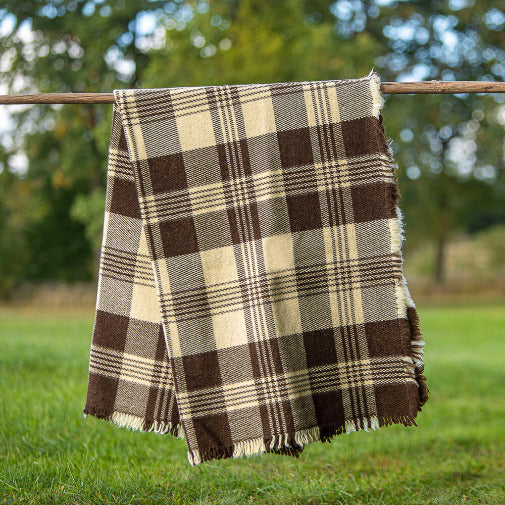
During the interwar period, my grandfather and namesake, Georgi Bečev, began trading in woollen goods from the Rhodope Mountains in southern Bulgaria, where he himself came from. Several times a year, he would set off with trade caravans to the town of Gjumjurdžina (Bulgarian: Гюмюрджина, Turkish: Gümülcine, today Komotini, Greek: Κομοτηνή), situated almost on the coast of the Aegean Sea. There, he sold Rhodope wool blankets, throws, shawls, fabrics and yarns to local Bulgarian, Greek and Turkish merchants. The goods then travelled on to ports in Europe and the Orient. For a long time, this was how woollen products from the Rhodopes found their way onto the shelves of shops in Istanbul and other major cities.

The first brick-and-mortar wool shop
Later, my grandfather opened his own wool shop in the town of Kardzhali (Bulgarian: Кърджали) in the foothills of the Rhodopes. It is in front of this very shop that he is pictured in a photograph from our family album. At that time, Kardzhali was a major crossroads where important roads from the Rhodopes and Thrace converged. Consequently, a large proportion of the output from this renowned wool-producing region flowed through here, regardless of whether it came from domestic weaving workshops or larger factories.

The Catastrophes of the 20th Century
Ottoman echoes in southern Bulgaria
His wife, my grandmother, was also involved in the wool trade. In Kardzhali, she ran a semi-state-owned shop selling Rhodope blankets, throws and chalištats. It also served as a wool collection point, so sheep farmers from far and wide would flock there. The sheep farmers would hand the wool over to my grandmother in large jute sacks. She would weigh it on a large table scale and then assess its quality and purity. Knowledge of Turkish was essential, as a large proportion of the population of the eastern Rhodopes consists of Turks, who in the past often did not speak Bulgarian. Discussions about the quality of the wool used to be very spirited, much like haggling over prices at an oriental bazaar. My grandmother handled these situations skilfully, yet always with a sense of fairness. She was held in high regard amongst the local Turks.
The Balkans or the Orient?
My sister and I often spent the whole summer in the Rhodopes. I felt right at home in my grandmother’s wool shop. I remember how, once a month, a lorry would arrive, from which we’d unload new blankets and then fill it with sacks of wool bound for production. My grandmother’s shop always struck me as the most important place in town, the very centre of its life. Perhaps only the nearby pazar, the vegetable market, could rival it. For me, the shop was the beating heart of Kardzhali, a place not only for those who wanted to buy and sell wool to their advantage. Over coffee and to the sound of the muezzin’s call, every conceivable problem facing this multi-ethnic town was discussed here. I also remember my grandmother’s Turkish assistant, Beysim, who wore black woollen trousers called poturi and a beret. Both were the distinguishing marks of the Bulgarian Turks.
Over time, the reputation of my grandmother’s shop began to extend beyond the country’s borders. Turks from Istanbul and Bursa arrived in droves to provide their daughters with a suitable dowry. Because of the queues at the border, they usually didn’t reach the town until the afternoon, when the whole of southern Bulgaria observes the siesta. Whenever visitors called out to her from afar, from the gate behind the wall of fig trees and roses, my grandmother would stop what she was doing, go with them into the shop and, in the forty-degree heat, offer them the very best of the Rhodope wool trade…
Childhood in the Rhodopes
From Kardzhali in the eastern Rhodopes, we would always travel to visit our great-grandmother in the central Rhodopes, where the heat was always slightly more bearable during the hot Balkan summer. The journey there was on a creaking bus, winding through countless hairpin bends lined with beautiful meadows, deep forests, ubiquitous ‘češmy’ – stone drinking fountains with refreshing water – and ancient bridges arching over glistening streams, was an experience in itself. It ended in a village full of tall stone houses with overhanging wooden storeys. A ‘čerga’, a woollen blanket or a ‘chalište’, hung from every window. In one such house lived Baba Dora, my great-grandmother, who lived to be almost a hundred years old. On the ground floor she had a small loom for weaving chalište, and in every conceivable drawer of her built-in carved cupboards she kept her colourful blankets and throws neatly stacked. At Baba Dora’s, my sister and I would wake up every morning to the ringing of sheep and cow bells from the herds that passed along the footpath beside our house on their way down into the deep valley of the River Arda. In the evening, they would return along the same path.
Balkan wool in Europe
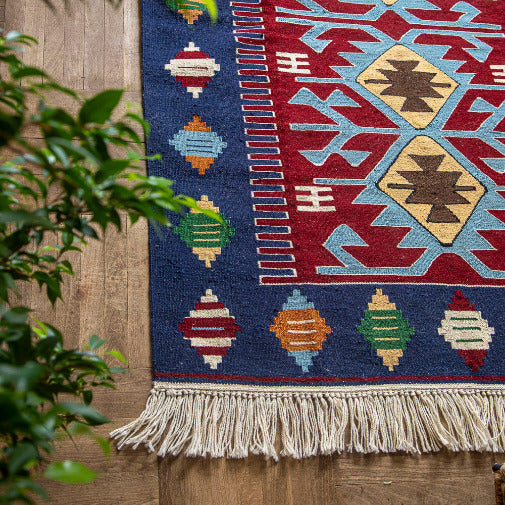
As the years went by, I began to realise that wool is by no means as commonplace in the Czech Republic as it is in the Balkans. Blankets, rugs or kilims, which I had always regarded as a natural part of life, seemed almost non-existent in Central Europe. And so, eventually, the idea took root in my mind to bring the very best of Rodop wool craftsmanship to the Czech Republic as well. In the spring of 2008, two friends – Tomáš and Honza, who were my business partners for the next few years and remain close friends to this day – and I set off on our first working trip to the Rhodopes and Stara Planina. Our travels through Bulgaria were full of colourful stories. What’s important, however, is that they laid the foundations for long-term partnerships and friendships that continue to this day. I know all the weavers and kilim makers who produce for us personally. Without this, trading with the Balkans would not only be tedious, but often almost impossible. Balkanova owes this to tough negotiations over countless cups of coffee. And although Balkanova is gradually expanding its reach across the Balkans and Asia Minor, you can be sure that we will always offer you only first-class products made from natural materials, each with a strong personal story and a clear lineage, crafted using time-honoured techniques and environmentally friendly methods. Products with a high, or even entirely, handcrafted component. Because we are bound by family tradition, and so we strive to live up to it even now, in the 21st century.